
Understanding blockchain technology can seem daunting at first, but it’s a concept that has the potential to revolutionize the way we think about data and transactions. In simple terms, blockchain is a decentralized ledger that records transactions across a network of computers. This technology allows for secure, transparent, and tamper-proof exchanges, making it an attractive solution for various industries.
As a beginner’s guide, this article aims to break down the complexities of blockchain, exploring its fundamental principles, applications, and benefits. By the end of this guide, you’ll have a solid grasp of how blockchain works and its significance in today’s digital landscape.
What Is Blockchain: The Fundamental Concept
The blockchain concept is built around a simple yet powerful idea: a decentralized, digital ledger that records transactions across a network of computers. This fundamental concept has far-reaching implications, transforming how we think about data security, transparency, and the exchange of value.
The Digital Ledger Explained
A digital ledger is a record-keeping system that stores transactions or data in a digital format. In the context of blockchain, this ledger is not stored in a single location but is distributed across a network of computers. This distribution ensures that the ledger is transparent and tamper-proof, as multiple parties have a copy of the same data.
| Feature | Traditional Ledger | Blockchain Ledger |
| Centralization | Centralized | Decentralized |
| Security | Vulnerable to single-point failure | Resistant to tampering and hacking |
| Transparency | Limited access | Transparent, with visible transactions |
Decentralization: The Core Principle
Decentralization is the cornerstone of blockchain technology. It means that the control and decision-making processes are distributed among a network of participants, rather than being controlled by a single entity.
How Decentralization Differs from Traditional Systems
Unlike traditional systems, which rely on a central authority to manage and verify transactions, blockchain’s decentralized nature allows for peer-to-peer transactions without the need for intermediaries. This not only enhances security but also increases the efficiency of transactions.
In summary, the blockchain concept revolves around a decentralized, digital ledger that offers a secure, transparent, and efficient way to record transactions. This fundamental concept is what sets blockchain apart from traditional ledger systems.
The Evolution of Blockchain Technology
Since the advent of Bitcoin, blockchain technology has evolved substantially. Initially developed as the underlying technology for Bitcoin, blockchain has grown beyond its cryptocurrency roots to encompass a wide range of applications.
From Bitcoin’s Genesis to Modern Applications
The first blockchain, Bitcoin’s blockchain, was launched in 2009. It introduced a decentralized, secure way to record transactions. Today, blockchain technology is being explored for various uses, including supply chain management, smart contracts, and identity verification.
Key Milestones in Blockchain Development
Several key milestones have marked the evolution of blockchain technology. Some notable developments include:
- The launch of Ethereum in 2015, which introduced smart contract functionality.
- The rise of alternative cryptocurrencies (altcoins) and tokens.
- Increased adoption of blockchain in industries such as finance, healthcare, and logistics.
Notable Blockchain Innovations Through the Years
Innovations in blockchain technology have continued to emerge, with advancements in scalability, security, and interoperability. These developments are crucial for the widespread adoption of blockchain technology.
How Blockchain Works: The Technical Breakdown
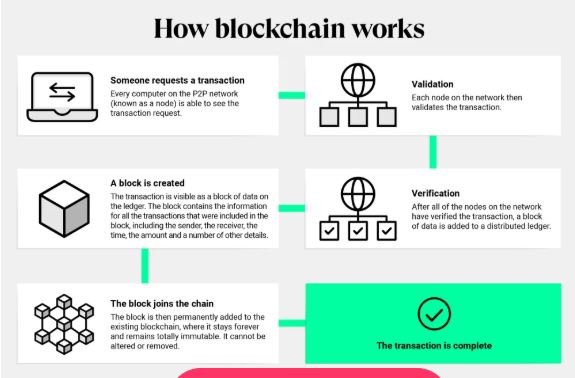
Blockchain’s underlying mechanics involve a complex interplay of blocks, chains, and transactions. At its core, blockchain is a distributed ledger technology that records transactions across a network of computers in a secure and transparent manner.
Blocks, Chains, and Transactions
A blockchain is made up of a series of blocks, each of which contains a list of transactions. These transactions are verified by nodes on the network and grouped into blocks. Each block is given a unique code, known as a “hash,” that connects it to the previous block, creating a chain of blocks.
Anatomy of a Block
A block typically consists of a header and a body. The header contains metadata, such as the block number, timestamp, and hash of the previous block. The body contains the list of transactions. Understanding the anatomy of a block is crucial for appreciating how blockchain technology works.
The Consensus Mechanism
The consensus mechanism is a critical component of blockchain technology, enabling the network to agree on the state of the blockchain. There are several types of consensus mechanisms, but the most common are Proof of Work (PoW) and Proof of Stake (PoS).
Proof of Work vs. Proof of Stake
Proof of Work requires miners to solve complex mathematical puzzles to validate transactions and create new blocks. In contrast, Proof of Stake requires validators to “stake” their own cryptocurrency to participate in the validation process. Both mechanisms have their advantages and disadvantages, with PoW being more energy-intensive but also more secure in some respects.
“The choice of consensus mechanism can significantly impact the security, scalability, and decentralization of a blockchain network.”
– Expert in Blockchain Technology
Cryptographic Security Features
Blockchain technology relies heavily on cryptography to secure transactions and control the creation of new blocks. Cryptographic hash functions and digital signatures are used to ensure the integrity and authenticity of transactions. These security features are what make blockchain so resistant to tampering and fraud.
- Cryptographic hash functions ensure data integrity.
- Digital signatures authenticate transactions.
- Public-key cryptography enables secure data transmission.
By understanding the technical breakdown of blockchain, including its blocks, chains, transactions, consensus mechanisms, and cryptographic security features, we can better appreciate the complexity and potential of this technology.
Key Features That Make Blockchain Revolutionary
Blockchain’s transformative potential is rooted in its key features, which include immutability, transparency, and the ability to automate complex processes through smart contracts. These characteristics collectively contribute to a robust and reliable technology that is poised to revolutionize various industries.
Immutability and Transparency
One of the core features of blockchain is its immutability, ensuring that once data is recorded, it cannot be altered or deleted. This is achieved through advanced cryptographic techniques. Alongside immutability, blockchain offers transparency, as all transactions are recorded on a public ledger that can be accessed by authorized parties. This transparency fosters trust among users.
Distributed Network Architecture
Blockchain operates on a distributed network architecture, meaning that data is not stored in a single location but is instead spread across a network of nodes. This decentralization enhances security and reduces the risk of a single point of failure, making the system more resilient.
Smart Contracts and Automation
Smart contracts are self-executing contracts with the terms of the agreement written directly into code. They automate complex processes, reducing the need for intermediaries and increasing efficiency.
Real-World Examples of Smart Contracts
- Supply chain management: Automating tracking and payment processes.
- Insurance claims: Automating claims processing based on predefined conditions.
- Real estate transactions: Facilitating secure and transparent property transfers.
These features collectively make blockchain a revolutionary technology with the potential to transform numerous sectors by enhancing security, transparency, and efficiency.
Types of Blockchain Networks
Understanding the different types of blockchain networks is crucial for appreciating their applications. Blockchain technology supports multiple network architectures, catering to diverse needs and use cases.
Public Blockchains
Public blockchains are open to anyone and are decentralized, meaning that no single entity controls the network. They are transparent, allowing anyone to view and verify transactions.
Bitcoin and Ethereum Examples
Examples of public blockchains include Bitcoin and Ethereum. Bitcoin is primarily used for cryptocurrency transactions, while Ethereum supports smart contracts and decentralized applications (dApps).
Private Blockchains
Private blockchains, on the other hand, are restricted to a specific group of users. They are often used by organizations that require a secure and private network for their operations.
Enterprise Applications
Private blockchains are utilized in enterprise environments for supply chain management, internal audits, and other business processes that require privacy and security.
Consortium and Hybrid Blockchains
Consortium blockchains are a mix of public and private blockchains, where a group of organizations control the network. Hybrid blockchains combine elements of both public and private blockchains, offering flexibility in terms of data access and control.
| Blockchain Type | Accessibility | Control | Use Cases |
| Public | Open to anyone | Decentralized | Cryptocurrency, dApps |
| Private | Restricted | Centralized | Enterprise applications, supply chain management |
| Consortium | Restricted to a group | Decentralized among members | Inter-organizational collaboration |
| Hybrid | Combination of public and private | Flexible | Customized solutions for businesses |
Blockchain Beyond Cryptocurrency
Blockchain technology has evolved significantly beyond its origins in cryptocurrency, offering a wide range of applications across various industries. Its decentralized, secure, and transparent nature makes it an attractive solution for multiple sectors.
The applications of blockchain are diverse and continue to grow. From enhancing supply chain management to transforming financial services, blockchain is making a significant impact.
Supply Chain Management Applications
One of the significant applications of blockchain is in supply chain management. By utilizing blockchain, companies can enhance transparency and traceability. For instance, Walmart has implemented blockchain to track its produce, ensuring food safety and quality control. According to a report, blockchain can help reduce supply chain costs by up to 20%.
“Blockchain technology has the potential to transform the supply chain industry by providing a secure, transparent, and efficient way to track goods.”
— Forbes
Healthcare Data Solutions
In healthcare, blockchain is being explored for its potential to securely manage patient data. By using blockchain, healthcare providers can ensure that patient records are tamper-proof and easily accessible. Medibloc is an example of a platform using blockchain for healthcare data management.
Financial Services Transformation
Blockchain is transforming financial services by enhancing security, reducing transaction times, and increasing transparency. Ripple is a notable example of a blockchain-based payment system that enables fast and secure cross-border transactions.
- Improved security through cryptographic techniques
- Faster transaction processing times
- Reduced costs by minimizing intermediaries
Government and Public Sector Use Cases
Governments are also exploring blockchain for various use cases, including voting systems and public records management.
Voting Systems and Public Records
The use of blockchain in voting systems can enhance the security and transparency of elections. For example, Voatz is a mobile voting platform that utilizes blockchain to ensure secure and verifiable voting. Similarly, blockchain can be used to manage public records, such as property deeds, making them more secure and accessible.
In conclusion, blockchain technology is being increasingly adopted across various sectors beyond cryptocurrency. Its potential to enhance security, transparency, and efficiency makes it a valuable tool for industries ranging from supply chain management to government operations.
Cryptocurrencies and Blockchain: Understanding the Connection
Blockchain technology has given rise to various cryptocurrencies, revolutionizing the way we think about money and financial transactions. At its core, the connection between cryptocurrencies and blockchain is about understanding how this technology enables secure, decentralized, and transparent financial systems.
Bitcoin: The First Blockchain Application
Bitcoin was the first application of blockchain technology, introduced in 2009. It demonstrated the potential of blockchain by creating a decentralized digital currency that allows for peer-to-peer transactions without the need for intermediaries. Bitcoin’s success paved the way for the development of other cryptocurrencies.
Ethereum and Smart Contract Platforms
Ethereum took the concept of blockchain further by introducing smart contracts. These are self-executing contracts with the terms of the agreement directly written into code. Ethereum’s platform allows developers to build decentralized applications (dApps) on top of its blockchain, expanding the use cases beyond simple cryptocurrency transactions.
Altcoins and Tokens Explained
The success of Bitcoin and Ethereum led to the creation of numerous other cryptocurrencies, often referred to as altcoins. Additionally, the rise of token-based systems allowed for the creation of digital assets on existing blockchain platforms. Tokens can represent a wide range of assets and utilities, from digital collectibles to voting rights.
Differences Between Coins and Tokens
While both coins and tokens are digital assets, they serve different purposes. Coins, such as Bitcoin, are standalone cryptocurrencies with their own blockchain. Tokens, on the other hand, are built on existing blockchain platforms and rely on their infrastructure. Understanding the distinction is crucial for navigating the cryptocurrency landscape.
The Benefits of Implementing Blockchain Technology
Blockchain technology offers numerous benefits, including enhanced security, reduced costs, and increased transparency, making it an attractive solution for various industries. By adopting blockchain, businesses can significantly improve their operational efficiency and build trust with their stakeholders.
Enhanced Security and Reduced Fraud
One of the primary advantages of blockchain is its ability to provide enhanced security through its decentralized and immutable ledger. This makes it difficult for hackers to manipulate transactions, thereby reducing the risk of fraud. For instance, in financial transactions, blockchain’s cryptographic features ensure that transactions are secure and tamper-proof.
Cost Reduction and Efficiency Gains
Blockchain technology can help organizations achieve cost reduction by automating processes and eliminating intermediaries. This not only speeds up transactions but also reduces the costs associated with traditional methods. For example, cross-border payments can be processed more quickly and at a lower cost using blockchain.
Increased Transparency and Trust
The transparency provided by blockchain is another significant benefit. All parties involved in a transaction have access to the same information, which fosters trust and reduces the potential for disputes. This is particularly valuable in supply chain management, where tracking the origin and movement of goods is crucial.
Case Studies of Successful Implementations
| Industry | Company | Blockchain Benefit |
| Finance | JPMorgan Chase | Reduced transaction costs and time |
| Supply Chain | Maersk | Improved tracking and reduced paperwork |
| Healthcare | Medibloc | Enhanced data security and interoperability |
Blockchain Security and Privacy Considerations
As blockchain technology continues to evolve, understanding its security and privacy considerations becomes increasingly crucial. Blockchain security encompasses various measures designed to protect the network from unauthorized access, fraud, and other malicious activities.
Misconceptions About Blockchain Security
A common misconception is that blockchain technology is completely secure and immune to attacks. However, while blockchain’s decentralized nature and cryptographic algorithms provide robust security features, they are not foolproof. Vulnerabilities can arise from improper implementation, smart contract bugs, or 51% attacks on smaller networks.
Privacy Features Across Different Blockchains
Different blockchain networks offer varying levels of privacy. For instance, Bitcoin provides pseudonymity, whereas privacy-focused coins like Monero and Zcash offer enhanced anonymity features. Understanding these differences is crucial for users and organizations to choose the right blockchain for their needs.
| Blockchain | Privacy Feature |
| Bitcoin | Pseudonymity |
| Monero | Ring Signatures for Anonymity |
| Zcash | Zero-Knowledge Proofs for Enhanced Privacy |
Best Practices for Enhancing Blockchain Security
To ensure the security of blockchain implementations, it’s essential to follow best practices such as conducting thorough smart contract audits, implementing multi-signature wallets, and regularly updating software. Staying informed about the latest security threats and patches is also crucial.
Challenges and Limitations of Blockchain
The growth of blockchain technology is impeded by various challenges, ranging from scalability to energy consumption concerns. Despite its potential, blockchain faces several hurdles that must be addressed to facilitate widespread adoption.
Scalability Issues
One of the primary challenges is scalability, which affects the transaction speed and volume that a blockchain can handle. Scalability issues arise because many blockchain networks are not designed to process transactions at the same speed or volume as traditional payment systems.
Transaction Speed and Volume Constraints
For instance, Bitcoin’s blockchain can handle a limited number of transactions per second, which can lead to congestion and increased transaction fees during peak usage periods.
Energy Consumption Concerns
Another significant challenge is energy consumption, particularly for blockchains that use proof-of-work consensus mechanisms, which require substantial computational power and, consequently, high energy usage.
Regulatory and Legal Hurdles
Regulatory and legal hurdles also pose significant challenges. The lack of clear regulations and standards across different jurisdictions can create uncertainty and obstacles for blockchain adoption.
Integration with Existing Systems
Finally, integrating blockchain technology with existing systems and infrastructure can be complex and challenging, requiring significant investment and coordination.
The Future of Blockchain Technology
Blockchain technology is on the cusp of a significant breakthrough, driven by advancements in scalability and interoperability. As the technology continues to mature, it’s expected to have a profound impact on various industries, from finance and healthcare to supply chain management.
Emerging Trends and Innovations
The blockchain landscape is witnessing several emerging trends, including the development of Layer 2 solutions aimed at enhancing scalability and interoperability between different blockchain networks. These innovations are crucial for the widespread adoption of blockchain technology.
Layer 2 Solutions and Interoperability
Layer 2 solutions, such as rollups and state channels, are being developed to address the scalability issues faced by many blockchain networks. Interoperability protocols are also being designed to enable seamless interactions between different blockchain platforms.
| Trend | Description | Impact |
| Layer 2 Solutions | Enhance scalability and reduce costs | High |
| Interoperability | Enable cross-chain interactions | High |
| DeFi and NFTs | New financial instruments and digital assets | Medium |
Potential Industry Disruptions
Blockchain technology has the potential to disrupt various industries, including finance, healthcare, and supply chain management. According to a report by Deloitte, blockchain could revolutionize the financial services sector by enhancing security and reducing transaction costs.
“Blockchain is not just a technology, it’s a new way of doing business.”
— Donnie Gerhardt, Deloitte
Expert Predictions for Blockchain Adoption
Experts predict that blockchain adoption will continue to grow, driven by increasing demand for secure and transparent transactions. The timeline for mainstream implementation is expected to be within the next few years.
Timeline for Mainstream Implementation
- Short-term (2024-2025): Increased adoption in financial services
- Mid-term (2026-2027): Expansion into supply chain management and healthcare
- Long-term (2028+): Widespread adoption across multiple industries
Conclusion: The Transformative Potential of Blockchain
Blockchain technology has emerged as a transformative technology, revolutionizing various industries with its decentralized, secure, and transparent architecture. As explored in the preceding sections, its blockchain potential extends far beyond cryptocurrency, transforming supply chain management, healthcare, financial services, and government sectors.
The key benefits of blockchain, including enhanced security, reduced fraud, and increased transparency, position it as a vital tool for businesses and governments alike. As the technology continues to evolve, we can expect to see innovative applications and further disruptions in traditional industries.
With its ability to provide a tamper-proof and transparent record of transactions, blockchain is poised to drive significant change. As industries continue to adopt and integrate this technology, its impact will be felt across the global economy. Understanding the blockchain potential and its transformative capabilities is crucial for organizations seeking to stay ahead in an increasingly competitive landscape.
FAQ
What is blockchain technology?
Blockchain technology is a decentralized, digital ledger that records transactions across a network of computers, ensuring transparency, security, and immutability.
How does blockchain work?
Blockchain works by creating a chain of blocks, each containing a list of transactions, which are verified and validated through a consensus mechanism, such as Proof of Work or Proof of Stake.
What is the difference between public and private blockchains?
Public blockchains, like Bitcoin and Ethereum, are open to anyone, while private blockchains are restricted to a specific group or organization, often used for enterprise applications.
What are smart contracts?
Smart contracts are self-executing contracts with the terms of the agreement written directly into lines of code, automating the enforcement and execution of contracts on a blockchain.
What are the benefits of using blockchain technology?
The benefits of blockchain technology include enhanced security, reduced fraud, cost savings, increased transparency, and improved efficiency, making it a revolutionary technology across various industries.
What are the challenges facing blockchain technology?
Blockchain technology faces challenges such as scalability issues, energy consumption concerns, regulatory and legal hurdles, and integration with existing systems, which need to be addressed for widespread adoption.
How is blockchain being used beyond cryptocurrency?
Blockchain is being used in various applications beyond cryptocurrency, including supply chain management, healthcare, financial services, government, and voting systems, transforming these industries with its unique features.
What is the future of blockchain technology?
The future of blockchain technology is promising, with emerging trends, innovations, and expert predictions indicating a potential for mainstream implementation and industry disruptions in the coming years.
How does blockchain ensure security and privacy?
Blockchain ensures security and privacy through cryptographic techniques, such as encryption and hashing, and through the use of private keys and digital signatures, protecting transactions and data.
What are the different types of blockchain networks?
There are public, private, consortium, and hybrid blockchain networks, each with its own characteristics and use cases, catering to different needs and applications.
You can also read What is Crypocurrency
Get more authentic information about Cryptocurrency at Crypto At Your Choice








2 thoughts on “Blockchain Explained: A Beginner’s Guide”